AuniConnect
Pre-marketplace infrastructure platform connecting talent operations, engagement, and performance management for distributed workforces.
Chat with Aunikah →The Problem: Reactive Talent Operations
While managing contractors at The Mom Project, I experienced critical operational gaps firsthand. We were constantly reactive rather than proactive—scrambling when contracts ended unexpectedly, manually tracking assignment details across spreadsheets, and lacking visibility into contractor engagement and performance.
Three specific pain points stood out:
- Contractors lacked visibility into their performance and value—no systematic way to showcase client feedback
- Managers had no tools to recognize engagement or track team performance across distributed talent
- Assignment lifecycle was reactive—we discovered retention risks too late, after contracts had already lapsed
I asked: What if we could build contractor confidence through recognition, predict churn before it happens, and give managers the tools to support distributed talent proactively?
The Solution: Pre-Marketplace Infrastructure
AuniConnect emerged as an integrated talent operations platform that solves the operational and engagement challenges talent marketplaces face before they even reach billing and payments. It's the foundation that makes marketplace success possible.
The platform evolved organically—each feature solving a real operational need. What some might call "scope creep" was actually systems thinking: recognition data should inform retention, retention should inform assignment management, and all of it should be visible to managers who can take action.
Renewal Radar: Predictive Retention
Stop reacting to contract expirations. Renewal Radar provides predictive alerts for upcoming end dates with risk scoring, filterable time windows (T-60, T-45, T-30, T-15), and one-click action buttons to extend, end, or convert assignments. Every action is logged with full audit history.
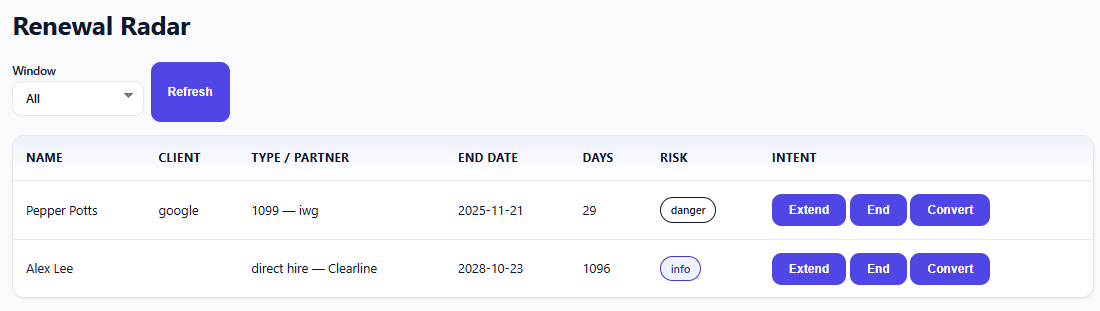
This feature alone addresses the #1 pain point from The Mom Project—being proactive instead of reactive about contractor retention.
Recognition & Company Values
Drawing from talent marketplace best practices, this module allows managers and colleagues to leave public recognition tied to company values. Contractors see their impact reflected back, clients can view performance history, and the platform tracks recognition patterns to identify who might need support—similar to how freelance platforms use visible feedback to build contractor reputation.
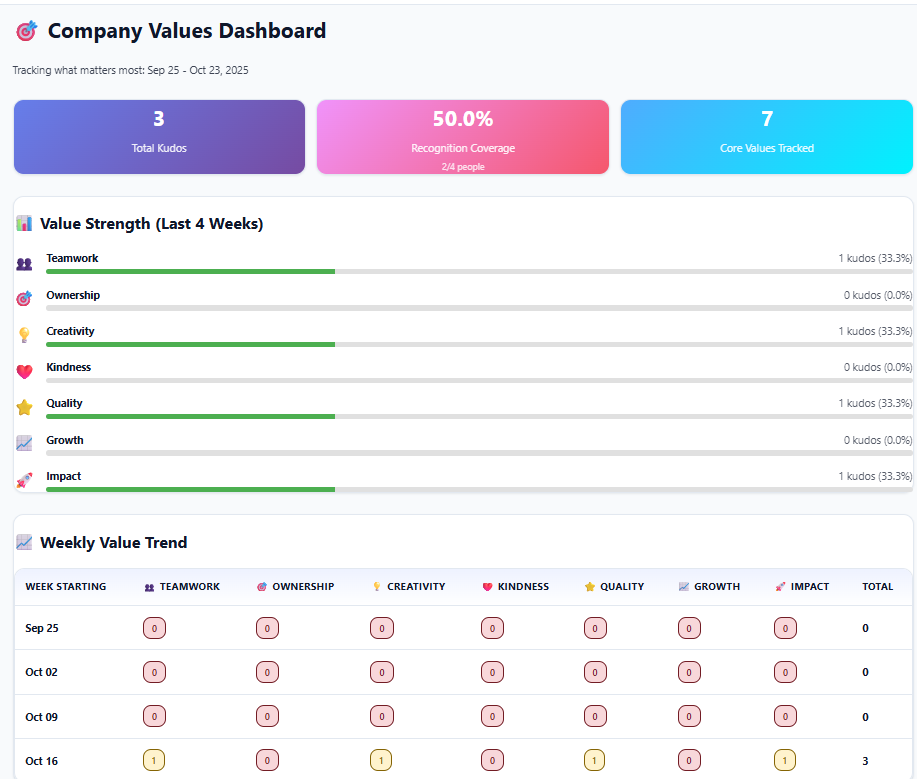
Recognition isn't just nice—it's performance data that feeds into retention predictions and manager insights.
Assignment Lifecycle Management
Comprehensive talent database tracking client assignments, employment types (direct hire, 1099, W2), EOR partners, start/end dates, and status. Includes full audit history for all changes, document management for contracts and tax forms, and escalation flags for issues requiring immediate attention.
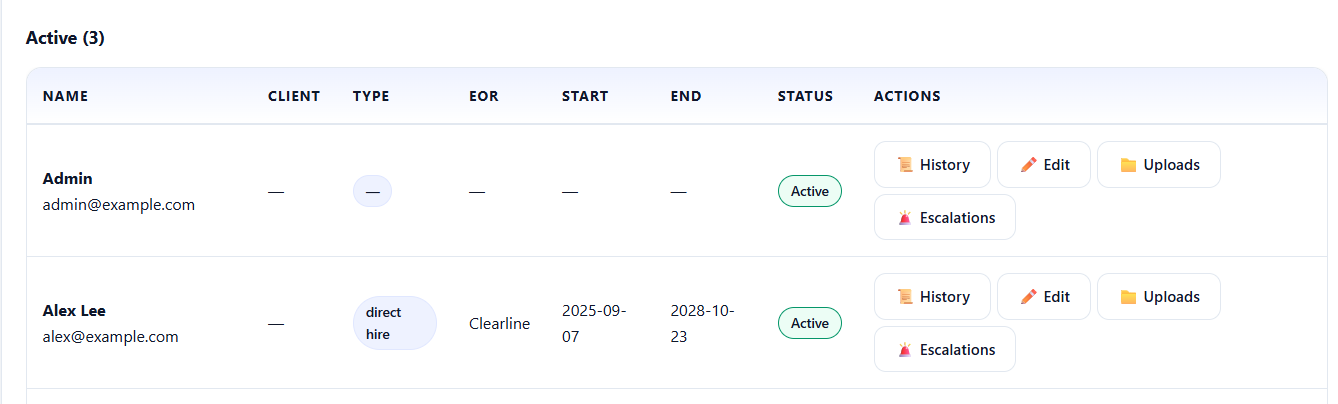
Clean assignment data is the foundation. Without this, you can't accurately bill, track performance, or predict retention.
Escalation Triage IQ
Smart support ticketing system with automated priority scoring, SLA tracking, and intelligent routing. Categorizes issues by severity, tracks response times, and flags SLA breaches before they happen. Integrates with Aunikah to escalate questions the chatbot can't handle.

Support operations matter. This ensures critical contractor issues get immediate attention with full accountability.
Manager Enablement Tools
Give managers visibility into their distributed teams with team performance dashboards, recognition analytics, and AI-powered suggestions for who needs recognition. Managers can see who hasn't received kudos recently, track team values alignment, and access coaching resources from Aunikah.
Managers of distributed talent need different tools than traditional people managers. This gives them what they need.
Aunikah: Support Agent Prototype
At the heart of the platform is Aunikah, a support agent prototype (AI-assisted build) that provides FAQ-style answers and routes unknown questions into Escalation Triage IQ. It’s designed for future LLM integration with escalation-first guardrails. Contractors and managers can ask questions about benefits, policies, time-off balances, and company resources—receiving instant, contextual responses that reduce the burden on HR staff.
Aunikah is designed with intelligent escalation: when she encounters questions outside her knowledge base, she automatically creates a support ticket in the Escalation Triage IQ system, ensuring nothing falls through the cracks.
Try Aunikah yourself
Chat with Aunikah →How It's Built
AuniConnect is built with modern, AI-assisted development practices using Python/Flask for the backend, HTML/CSS/JavaScript for the frontend, and JSON-based data storage for rapid prototyping and iteration.
The platform is designed with modularity and integration points in mind. While Phase 1 focuses on operations and engagement infrastructure, it's architected to integrate with:
- Payment processors (Stripe, PayPal) for billing automation
- Time tracking systems for 1099 contractor management
- Existing HRIS platforms (Workday, BambooHR, UKG) via API
- Communication tools (Slack, Microsoft Teams) for notifications
This is pre-marketplace infrastructure—the operational foundation that makes billing, payments, and marketplace features possible by ensuring clean data, engaged talent, and proactive management.
What This Demonstrates
Creating AuniConnect showcases several key capabilities that translate directly to HRIS and People Operations roles:
- Systems thinking — Understanding how talent operations, engagement, and performance management interconnect
- Problem identification — Recognizing operational gaps from real-world experience and designing solutions
- Product development — Making strategic scope decisions, prioritizing features, and iterating based on needs
- Data architecture — Modeling complex relationships between contractors, assignments, clients, and performance data
- Process improvement — Shifting from reactive to proactive operations through predictive analytics
- Technical aptitude — Using modern development tools and AI assistance to build working products
- Change management — Designing user-friendly interfaces and support systems for distributed teams
This isn’t just a concept—it’s a working local prototype built from real operational pain points I experienced firsthand. It demonstrates the 0→1 systems thinking and execution early-stage teams need to build HR infrastructure from scratch.
What's Next
The current platform represents Phase 1: the operational and engagement foundation. Phase 2 would focus on marketplace completion with time tracking integration for 1099 contractors and payment/billing automation—the pieces that transform this from pre-marketplace infrastructure into a full talent marketplace platform.
In a real startup environment, next steps would be driven by user feedback, business priorities, and integration requirements. The modular architecture makes it straightforward to add new capabilities or integrate with existing enterprise systems.